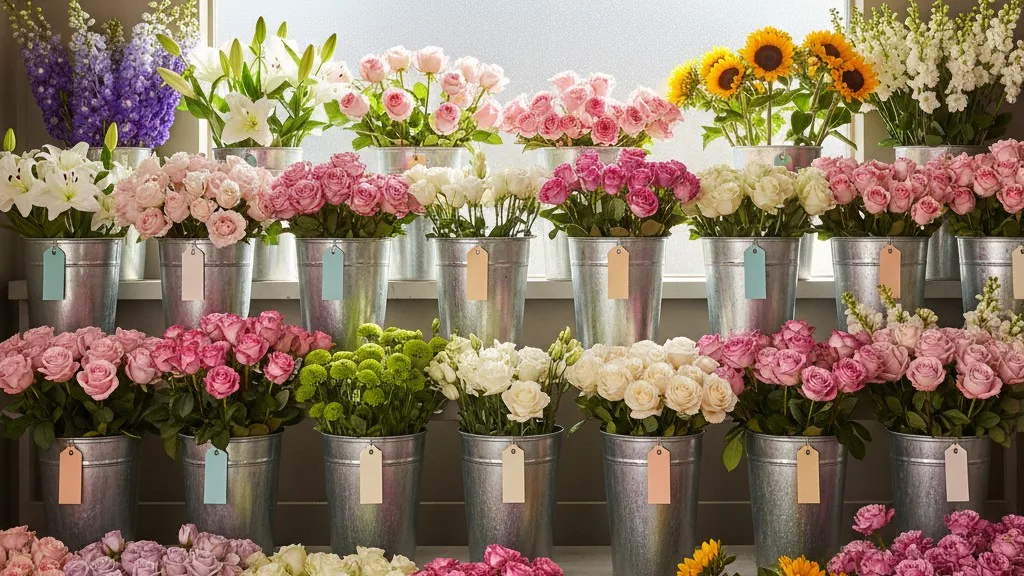
Every florist knows the sinking feeling of opening the walk-in cooler the morning after a major holiday and seeing buckets of unsold, opening blooms. Balancing supply with demand during peak floral holidays is one of the most difficult parts of running a retail flower shop. Utilizing systematic florist inventory management is the only way to protect your profit margins and reduce green waste when order volumes spike.
Overbuying is not an inevitable cost of doing business; it is usually the result of buying based on emotion rather than historical records. By shifting to a structured, data-driven approach to procurement, you can keep your cooler fresh, your designers productive, and your cash flow stable. This guide walks you through the exact operational steps required to manage your seasonal floral inventory without overbuying.
The Real Cost of Overbuying Seasonal Blooms
When you buy too many stems for a holiday like Valentine's Day or Mother's Day, the financial damage goes far beyond the wholesale cost of the unused flowers. Overbuying clogs your physical workspace, drains your labor budget, and compromises the quality of the designs you actually deliver. Understanding these hidden costs is the first step toward changing your buying habits.
First, consider physical space. A cooler packed to the ceiling with buckets reduces air circulation, which raises the temperature inside the unit and accelerates flower aging. When your design team has to fight for physical access to the flowers they need, production slows down. Stems get broken as buckets are dragged in and out of tight spaces, directly increasing your shrinkage rate.
Second, labor costs rise dramatically when you overbuy. Your design and processing staff must spend valuable hours unboxing, stripping, hydrating, and organizing product that will ultimately end up in the green bin. If your shop has outgrown manual spreadsheets, you may find that tracking these hours and matching them against actual sales becomes nearly impossible without dedicated tools.
Finally, there is the risk of reputation damage. When a shop is overstocked, designers naturally try to use up older flowers first to save them from the bin. This means customers receive arrangements made with older, fully opened stems that have a shorter vase life at home. A single bad experience during a major holiday can lose you a customer for the rest of the year.
Establishing a Baseline with Historical Sales Data
You cannot make accurate buying decisions for the future without looking at the past. Before you place a single pre-book order with your wholesalers, you must gather your sales data from the same holiday over the last two to three years. If you rely on paper tickets or basic cash registers, this process can take days; if you use modern point-of-sale software, you can pull these reports in minutes.
When analyzing your historical sales data, look for three specific metrics:
- Total Order Volume: The exact number of individual deliveries, pickups, and walk-in sales completed during the holiday week.
- Product Category Breakdown: The total number of arrangements sold at specific price points (e.g., how many fifty-dollar wrapped bouquets versus how many hundred-dollar vase arrangements).
- Recipe Utilization: The specific flower varieties and stem counts that were actually used in your holiday recipes.
Once you have these numbers, adjust them for current market variables. Consider the day of the week the holiday falls on, as this drastically changes buying behavior. For example, when Valentine's Day falls on a mid-week workday, office deliveries spike, whereas a Sunday Valentine's Day often results in more weekend walk-ins and lower overall corporate delivery volumes. You must also check your local calendar for community events, graduations, or regional weather patterns that could impact foot traffic.
Building Recipe-Based Ordering Sheets
The most common mistake florists make is buying flowers by the bunch or by the box without a clear plan for how those stems will be distributed. To prevent overbuying, you must design your seasonal menu first, calculate the exact stem recipes for each design, and then compile those recipes into a master buying sheet.

Step 1: Limit Your Holiday Menu
Do not offer your entire year-round catalog during a major holiday. Limit your seasonal menu to three to five signature designs at low, medium, and high price points. This limits the variety of specialty stems you need to buy and allows your designers to work much faster through repetition.
Step 2: Write Exact Recipes
Every arrangement on your holiday menu must have a strict, written recipe. Write down the exact number of primary focal flowers, secondary flowers, textures, and greens. For example, a medium holiday arrangement might require five roses, three carnations, two stems of spray roses, three stems of eucalyptus, and two stems of leather leaf. Never leave the stem selection up to the designer's whim during a rush.
Step 3: Consolidate Stems into a Master Purchase Order
Multiply the stem counts in your recipes by the number of arrangements you plan to sell. If your historical data suggests you will sell fifty of your medium holiday arrangements, multiply every stem in that recipe by fifty. Consolidate these totals into a master list of individual stems, then divide those totals by the standard wholesale bunch sizes (e.g., ten stems per bunch for most lilies, twenty-five stems for roses) to determine exactly how many wholesale bunches you need to order.
Implementing a Staged Buying Schedule
Never buy all your seasonal inventory at once. A staged buying schedule allows you to secure your baseline product early while remaining flexible enough to adjust your order as the holiday approaches and real-time sales data rolls in.
Divide your buying plan into three distinct phases:
- The Pre-Book (6 to 8 weeks out): Secure your core focal flowers, such as roses, hydrangeas, or lilies, with your trusted wholesalers. This guarantees you get the colors and quality you need at a locked-in price. Limit your pre-book to roughly sixty to seventy percent of your projected sales volume.
- The Mid-Point Adjustment (2 to 3 weeks out): Review your incoming pre-orders. If orders are coming in slower than expected, contact your wholesaler to see if you can scale back your standing orders or shift colors. If orders are tracking ahead of last year, increase your wholesale orders accordingly.
- The Open Market Fill (Holiday week): Use local flower markets or wholesale walk-ins to purchase your remaining filler flowers, greens, and last-minute walk-in stock. This allows you to react to the exact color trends and volume demands of your customers without holding excess stock for weeks.
Always verify local wholesale return and cancellation policies, as they vary widely by region and supplier. Some wholesalers require final, non-refundable commitments weeks in advance, while others allow minor adjustments closer to the shipping date.
Managing the Cooler and Daily Rotation Workflows
Once your seasonal inventory arrives at your shop, your physical workflow determines whether those flowers survive to be sold or end up in the trash. Proper processing, bucket organization, and rotation are critical to maintaining the vase life of your inventory.

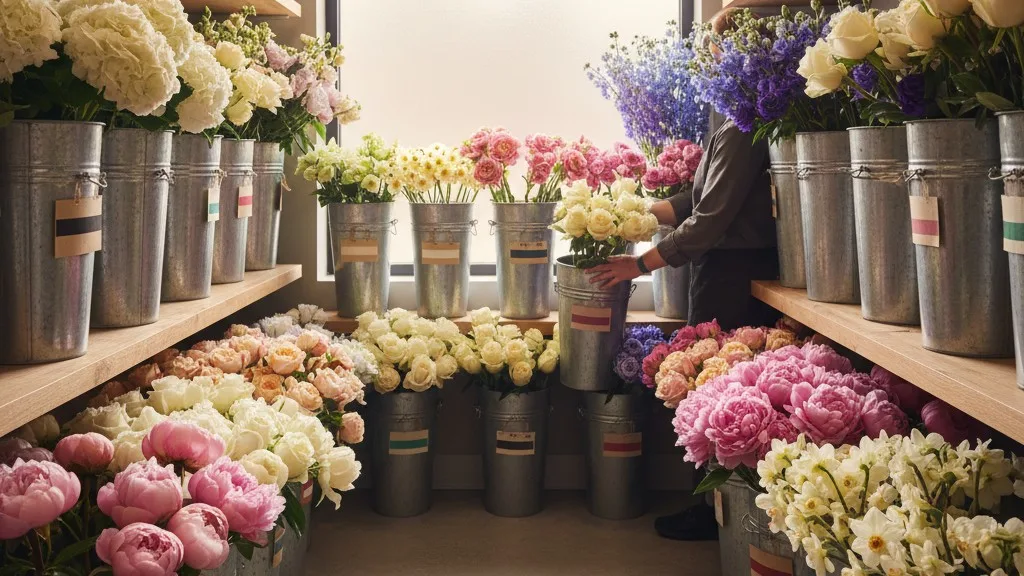
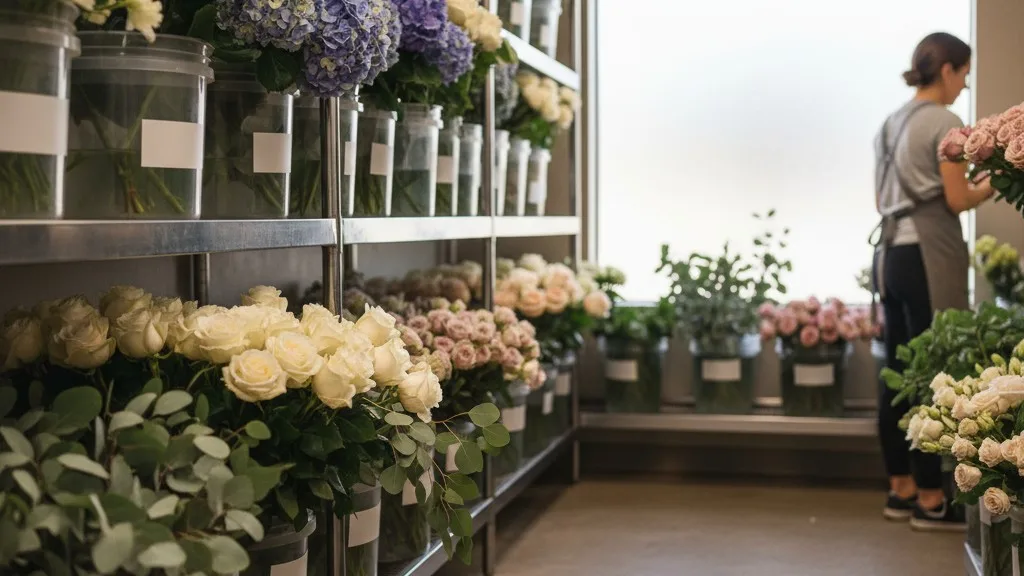
When shipments arrive, process them immediately using clean buckets, fresh water, and professional flower food. Use a strict first-in, first-out (FIFO) system. Clearly label every bucket with the arrival date and the flower variety. Keep your oldest stock near the front of the cooler where designers will grab it first, and store your freshest, tightest buds in the back to open slowly.
Group your buckets by recipe rather than by flower type. If you have fifty orders for your signature holiday arrangement, create a dedicated section in your cooler containing all the buckets of roses, spray roses, and greens needed for that specific recipe. This prevents designers from wandering around the cooler, leaving doors open, and pulling stems that were reserved for other designs.
Assign one team member to monitor cooler temperatures and humidity levels daily. Keep your cooler between thirty-four and thirty-eight degrees Fahrenheit to slow down the opening process. Ensure your cooler is free of decaying organic matter, as ethylene gas from dying leaves will cause nearby buds to drop prematurely.
Creative Strategies for Clearing Excess Stem Inventory
Even with the most careful planning, you will occasionally find yourself with extra inventory as a holiday winds down. Instead of letting those stems rot in the cooler, use active retail strategies to clear them out quickly and recover your costs.
First, train your sales team to push "Designer's Choice" arrangements during the final days of a holiday rush. This allows your design team to look at the remaining inventory in the cooler and build custom arrangements using whatever stems are left, rather than being locked into specific recipes. You can offer these at a slight discount or promote them as premium, unique designs.
Second, create wrapped grab-and-go bouquets using your excess focal flowers and filler greens. Place these near your cash register or outside your shop door to tempt last-minute walk-in shoppers who may not want a full vase arrangement. Price them to move; it is better to recover your wholesale cost on a bundle of roses than to throw them in the dumpster three days later.
Third, consider partnering with local businesses, such as coffee shops, restaurants, or boutiques, to supply them with quick, low-cost bud vases or simple counter arrangements using your leftover holiday stems. This keeps your flowers out of the trash, builds community relationships, and acts as direct marketing for your shop.
Refining Your Process for the Next Season
The work of inventory management does not end when the holiday is over. The final, crucial step is to conduct a post-holiday debrief while the details are still fresh in your mind and your team's memory.
Gather your design, sales, and delivery teams for a brief meeting. Ask them what worked and what did not. Did you run out of leather leaf on day two? Did you have three buckets of yellow carnations left over? Write these details down immediately on your master buying sheets so you do not repeat the same mistakes next year.
Using modern flower shop software can simplify this entire cycle, letting you track recipes, manage stock levels, and view precise sales reports from previous seasons without digging through piles of paper. By combining disciplined physical workflows with clear historical data, you can run a profitable, low-waste floral business year-round.
To see how a dedicated system can streamline your shop's operations, keep your recipes organized, and help you track your stock levels without the headache of manual spreadsheets, book a free 30-minute Orkyd demo today.